Tuesday, November 10, 2009

The Necessity of Doubt


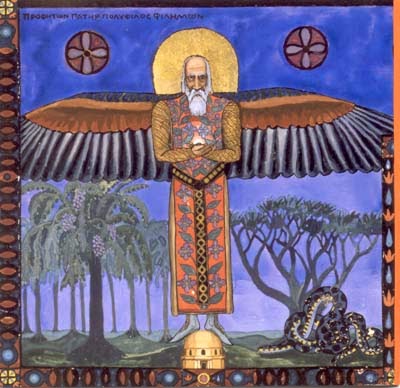
Doubt is the subjective condition that belongs to mind which judges the facts, where the mind is suspended between two or more propositions and is not able to assent to any of them.  Is doubt necessary to our attainment of knowledge and aspiration to a higher consciousness?  Or is it a limitation to these, leaving us in mistrust, suspicion or uncertainty and without belief?  Is doubt necessary?  Does it exclude faith?
Aristotle believed doubt to be preliminary to philosophical inquiry and the only means by which the necessary removal of prejudice may be effected.  Bacon believed that the scholastic proof of a proposition or thesis begins by the statement of doubts or contrary arguments.
Thomas Huxley gave the name agnosticism to the state: “of being strictly doubtful towards all that lies beyond sense-experience.”  Pragmatism regards all reality as doubtful, and truth as perpetually changing with the progress of human thought.
What do YOU think?
Artwork by Jayne Edwards   Many Thanks

Thursday, October 1, 2009

The Role of Emotion in Experience


What role does emotion play in our everyday lives?  How does emotion affect our experience and being?  These are questions addressed by some of the finest minds of our era. 
For Piaget, emotion is the motivating force of action emanating from outside the individual in the form of sensations emitted by objects.  His view is rooted in the Newtonian conception of a universe comprised in isolated objects requiring an emotive force to initiate a series of mechanistic interactions between objects.  Piaget reduces all conscious human experience to a cognitive formulation of these causal relations.    His abstract concept of emotion as force fails to explain the relationship between bodily feelings, emotions, and higher forms of consciousness in human beings.
Alfred North Whitehead indicates the factors in human nature which go to make up the particular emotions, arise from our apprehension of these permanent features of order in the world. His concrete concept of emotion gives insight into the experience of bodily feelings and their relationship to the growth and learning of human beings.  He explains the emotions are the crucial mediating factors between the welter of awareness of these feelings in higher organisms.  “We perceive other things which are in the world of actualities in the same sense as we are.   So our emotions are directed toward other things, including of course, our bodily organs . . . the world for me is nothing else than how the functioning of my body present it for my experience.”
Jean Paul Sartre sees it differently in his book, The Emotions, Outline of a Theory.  He sees our emotion as an “abrupt drop of consciousness into the magical.”  He believes:  “emotion is not accidental modification of a subject which would otherwise be plunged into an unchanged world.  It is easy to see that every emotional apprehension of an object which frightens, irritates, sadness, etc., can be made only on the basis of a total alteration of the world.  In order that an object may in reality appear terrible, it must realize itself as an immediate and magical presence face to face with consciousness.“  In other words, we modify our experience with emotion to make it more comfortable, according to our own nature.  We emote sadness, anger or gloom because “lacking the power and will to accomplish the acts which we have been planning, we behave in such a way that the universe no longer requires anything of us.”
What do YOU think?
Artwork by Beth Nash.  Many thanks.

Sunday, September 6, 2009

Consciousness, Ourselves and Our World


Various scientists and philosophers have given us myriad ideas of consciousness. Some see it as the result of our physical brain function.  Others explain consciousness as a non local essence of phenomenon.
Paul Valery: “The universe is built on a plan the profound symmetry of which is somehow expressed in the inner structure of our intellect.”
James Jeans: “[T]he universe begins to look more like a great thought than like a great machine. Mind no longer appears as an accidental intruder into the realm of matter; we are beginning to suspect that we ought rather to hail it as the creator and governor of the realm of matter.”
Albert Einstein: “It seems that the human mind has first to construct forms independently before we can find them in things.... Knowledge cannot spring from experience alone, but only from a comparison of the inventions of the intellect with observed fact.”
As Augustine, Valery, Eddington, and Einstein have duly noted, every “something” that our consciousness may see and point to reflects the qualities of the consciousness that is pointing.
Dan Dennett has us looking at our own perceptions, and suggests that it is the observer of viewpoint that is consciousness:  http://www.ted.com/talks/view/id/102
How do you explain consciousness? 
Artwork by F. Rassouli  Many thanks.

Saturday, August 22, 2009

The Inspiring Synchronicity All Around Us


Synchronicity is, I think, becoming more a part of our scientific and philosophic paradigms. Webster defines it as: the quality or state of being synchronous or simultaneous: concurrence of acts, events, or developments in time: coincident movement or existence; chronological arrangement of historical events and personages so as to indicate coincidence or coexistence; a representation in the same picture of two or more events which occurred at different times.

Jung required a larger framework for his idea of synchronicity, a framework that reveals an underlying pattern for what he called "temporally coincident occurrences of acausal events."

What does synchronicity mean to you? What role does it play in your life?

What do YOU think?

Artwork by Cindy Hesse Many thanks.

Friday, July 24, 2009

Are You In Control?


Are we in control of ourselves, our lives, our families, our worlds? Or are we just aware and knowing what one can do if something unpredictable happens?

There are many explanations for why we do what we do. For example, Thomas Metzinger's new Book, The Ego Tunnel: The Science of the Mind and the Myth of the Self, seriously questions whether there is even an "I", let alone a "we." And Douglas Hofstadter's book, I Am a Strange Loop, contends that the "self" is a recursively self-referencing memory loop.

Hundreds of experiments by Benjamin Libet and others tend to conclusively confirm that our brain prepares to execute our decisions before we are even aware that anything is being decided. It alerts us to our decisions only in time (a split second) for us to veto them.

Libet postulates that it is quite likely that we have no so-called "free will" other than veto power over our specific actions. Our free will may consist instead of 1) being mindful about any ill-serving subliminal intentions and tendencies that inform our actions so that we are accordingly prepared to veto any action that they correspondingly inform, and of 2) programming (or reprogramming) our subliminal intentions to be more productive of the experiencing that we most desire.

Do we have the power to create our realities? Are we in control?

What do YOU think?

Artwork: Create by Ron Isom Many thanks.

Tuesday, July 7, 2009

Spend the Day in Beauty


What is beauty? Is being beautiful like tasting good to Bob (subjective) or being 150 lbs. (objective)? The saying “beauty is in the eye of the beholder” suggests subjective. But other sayings—“beauty is truth” or “beauty is eternal”—suggest there is some objective quality to beauty. Advocates of the subjective view emphasize how difficult it is to get people to agree on aesthetic judgments. Advocates of the objective view make arguments like: “The Grand Canyon would be beautiful regardless of whether anyone was there to see it, so beauty is in the object.”

Aristotle believed that there was no absolute beauty, but that it was based on perception. As a general term, the Greeks perceived beauty as interchangeable with excellence, perfection, and satisfaction. Plotinus believed that beauty did not include symmetry. However, "beauty is that which irradiates symmetry, rather than symmetry itself."

Plato introduced to the ideal of "Platonic love:" Plato saw love as motivated by a longing for the highest form of beauty—The Beautiful Itself, and love as the motivational power through which the highest of achievements are possible.

Kant argues that such aesthetic judgments are 'judgments of taste', and insists that universality and necessity are in fact a product of features of the human mind (Kant calls these features 'common sense'), and that there is no objective property of a thing that makes it beautiful.

The Taoist sage also thinks it is human judgment that what happens is beautiful or ugly, right or wrong, fortunate or not. The sage knows all things are one (equal) and does not judge. Our lives are snarled and jumbled so long as we make conventional discriminations, but when we set them aside, we appear to others as extraordinary and enchanted.

Benedetto Croce, originator of the modern “expressionist theory” of aesthetic, maintains that the difference between the beautiful and the ugly is that: “expression in the naturalistic sense simply lacks expression in the spiritual sense, that is to say, the very character of activity of the spirituality, and therefore the bipartition into the poles of beauty and of ugliness.” He sees beauty as part of the process of aesthetic expression that has four stages: impressions, expression or spiritual aesthetic synthesis (intuition), pleasure of the beautiful, translation of the aesthetic fact into physical phenomena. The expressive process is exhausted when these four phases have been passed through.

What do YOU think?

Friday, June 5, 2009

The Union of the Sacred and Secular


Sacred and secular…can they co-exist and where do they meet? As we increase our material wealth and extend ourselves with technology, do we have a tendency to lose our sense of what is sacred in the world?


Some say that sacred, or holy, practices are a product of the past that will be outgrown in modern society, and see sacred associated with religion, whose role in the world is currently changing.


Secular is usually associated with bureaucratization, rationalization, urbanization, industrialization, and seen in terms of historical revolutions.


Most of us live with a tension between the two, as sort of being “in the world, but not of the world.” Is it possible to live in integration of the two, with no separation between the sacred and the secular?


American Sociologist C. Wright Mills summarized this process: “Once the world was filled with the sacred – in thought, practice, and institutional form. After the Reformation and the Renaissance, the forces of modernization swept across the globe and secularization, a corollary historical process, loosened the dominance of the sacred. In due course, the sacred shall disappear altogether except, possibly, in the private realm.”


In the bible, Paul writes, “To the pure, all things are pure” (Titus 1:15) Finding the sacred in the secular might just be the way to go. But it is not easy to do as we watch the evening news.


What do YOU think?

Artwork Playing With Possibilities by Ron Isom

Thursday, May 14, 2009

The Finite Mask That Covers the Infinite


Joseph Campbell is probably our best known contemporary expert on the subject of masks, and his work including his massive studies, Masks of God and Masks of Eternity, offer his keen insight into our own abilities to don a mask and uncover the masks we find.


What is it about us that put on our masks? What about us creates the need for one? When do we confuse our mask with who we really are? When are masks useful and when do they become obstacles for us?


I’m not talking about the functional, physical mask such as theatrical, surgical, protect and disguise mask etc. I am talking about the mask of persona, the way we pretend to be one way and are really another. Politesse is a good example and can often be a cultural custom. When our words and mannerisms are polite, but our actions and innuendos aggressive, we are wearing a mask. When we profess undying love as a means to an end, and walk away in the morning light, we are wearing a mask. Sometimes, we lose sight of our own masks and are confused about who we really are. Why?


What do YOU think?

Artwork by Susan Seddon Boulet Many thanks.

Friday, May 1, 2009

The Meaning of Love


What is love? What does it mean in our lives? We all seem to come to our own understanding of love as we mature into adulthood, and that understanding changes and evolves as we do, so what does it mean to you right now?

The Greeks broke love down for us into categories: Eros, or sexual love; Philios, or love of friends, love in return for love; Agape, or unconditional love, the love of God for humanity.

Then there is the idea that love is intertwined with death. Andre Breton, in The Lost Steps tells us, “Pardon me for thinking that, unlike ivy, I die when I become attached.” And Albert Camus: “Love demands the impossible, the absolute, the sky on fire, inexhaustible springtime, life after death, and death itself transfigured into eternal life.”

What do YOU think?

Friday, April 3, 2009

Morality as Harmonic Chord


"Love thy neighbor as thyself" or the golden rule, can be found with
slight variations throughout philosophy and religion, here are a few:


Judaism: “…thou shalt love thy neighbor as thyself.”, Leviticus 19:18


Islam: “None of you [truly] believes until he wishes for his brother what he wishes for himself.” Number 13 of Imam “Al-Nawawi’s Forty Hadiths.”

Native American Spirituality: “All things are our relatives; what we do to everything, we do to ourselves. All is really One.” Black Elk


Shinto: “The heart of the person before you is a mirror. See there your own form


Confucianism: “Do not do to others what you do not want them to do to you” Analects 15:23


Why is this important? Why is morality essential to the fabric of our lives? It prescribes consistency and allows our actions to be in harmony with our desires. It provides an internal compass that we can use to navigate society. How we apply the golden rule, or how we are able to treat others the way we ourselves would like to be treated, tests our moral coherence.


What do YOU think?

Tuesday, February 10, 2009

Our Own Wonderful Infinite Nature


“Give me my robe, put on my crown; I have Immortal longings in me,” Shakespeare instructs us. But do we? Is there a part of us that is infinite, or is immortality just a longing? There are at least parts of our beings that are infinite, according to Shakespeare: “What a piece of work is a man, how noble in reason, how infinite in faculties, in form and moving how express and admirable, in action how like an angel, in apprehension how like a god.”


Our infinite nature is not just fodder for the poets. Einstein came to the conclusion that “the infinite nature of man includes the universe.” Kierkegaard explained our existence in this way: “Man is a synthesis of the infinite and the finite, of the temporal and the eternal, of freedom and necessity, in short a synthesis. A synthesis is a relation between two factors. So regarded, man is not yet a self.”


What do YOU think?

Tuesday, December 30, 2008

The Keyless Entry of Self Image


Self-image is the personal view we have of ourselves. It is our mental image or self portrait. Self-image is an internal dictionary that describes the characteristics of the self, including concepts like intelligence, beauty, kindness, selfishness or insensitivity. These characteristics form a collective representation of our assets and liabilities as we see them. Relationships reinforce what we think and feel about ourselves. Self-image is important because how we think about ourselves directly affects how we feel about ourselves and how we respond to life.


How we think and feel about ourselves influences the way we react or respond to life stressors. A hopeless self-image can lead to suicide. Self-image possessing body strength and health can lead to wellness. A loving self-image can lead to a life full of loving relationships. An angry self-image can lead to a life of isolation. A fearful self-image can lead to a life of suffering. In these ways, self-image can determine the quality of our relationships with others.


How we imagine ourselves to be can be different from how we witness ourselves to be, but ultimately the two will become the same if our desire to be as we imagine is unwavering. Depending on the beliefs we gather throughout our life, our self-image can bring us success and happiness, or, on the other hand, failure and misery. But this image can change, if we start questioning our beliefs about our selves and our lives. When our belief system falls apart, we are ready to receive a greater truth, and resurrect belief, born anew with possibility.


What do YOU think?

Friday, December 5, 2008

Unlimited Golden Shadow

In order to understand repetitive patterns in relationships, Dr. Carl Jung suggested what we understand the psychological rule: “The psychological rule says that when an inner situation is not made conscious, it happens outside as fate. That is to say, when the individual remains undivided and does not become conscious of his inner opposite, the world must perforce act out the conflict and be torn into opposing halves.”

This acting out involves projecting our shadow aspects, or our belief in our own limitations. The more we know about ourselves, the more choices we have, and our limitations fall away. We can then choose not to behave in a certain way. When we don’t know about something, then it will take on a compulsive, autonomous element to it. Projection is an unconscious psychological mechanism. We all project onto other people parts of ourselves that we disown, that we deny. We will usually not identify with the projected quality or characteristic at all. It’s them. It’s not us. Until we accept our own shadow.

One of Carl Jung's real contributions, was to point out that our shadow, or the rejected aspects of ourselves or undeveloped potential, contains all sorts of creative, positive content. If you were a musically gifted child, for instance, and you dreamed about playing guitar or composing a symphony but your parents felt that they wanted you to perform academically and go to law school and join the family law firm, your musical ability went into the shadow.

Rudolph Steiner's take on shadow is the Guardians of the Threshold - there are two. You cannot cross the threshold into integration until you know that you can illuminate darkness yourself. The first Guardian, contains all of our fears in aspects of good and evil. These fears prohibit our crossing the Threshold until we reconcile all good and evil within and see them interwoven into whole being. The unseen then becomes seen.

The second Guardian is a sublime, luminous beauty impossible to describe. It holds our highest potential, and our low self image and our perceived limits keep us from embracing this Guardian and crossing the Threshold. To embrace the second Guardian we must realize that invisible forces within our selves create our character and that our world of sense is a seed ground for the higher world. By embracing the second Guardian, everyone is redeemed and all are connected. We cannot cross the threshold in separation.

Once we can cross the threshold, according to Steiner, divine protection envelops us. Evil that was once part of our experience will no longer enter our experience. Because we have integrated evil and no longer hold it in separation, the greater is joined to the lesser and proceeds from us in love for all.

What do YOU think?

Thursday, November 13, 2008

What Do We Do Now?


It was Will Rogers that said: If you want to be successful, know what you are doing, love what you are doing, and believe in what you are doing.

But what does it mean “to do.” Why do we so often feel compelled to do something? Merriam Webster tells us that do means to cause, to make, to bring to pass, to perform, to execute and to conduct oneself. But how do we know what to do? When is it better to do nothing?

The concept of self-efficacy is the focal point of Albert Bandura's social cognitive theory. Self-efficacy plays the central role in the cognitive regulation of motivation, because people regulate the level and the distribution of effort they will expend in accordance with the effects they are expecting.

So there is a necessary confidence in doing because doing is expressed in the perception of the principal aim of life as accomplishing things mainly for the good of both the individual and society. When is it right to do nothing, to just let it be? Being is mainly directed at the individual’s cultivation and development of his personality (Erich Fromm). Perhaps the answer is not to choose, but to recognize being in the midst of doing. This requires the understanding that Doing and Being are a profound pair of complementary qualities in human existence.

The Christian mystic Neville Goddard believed that the only thing to do is imagine: “If you imagine a state, remain faithful to it, and it externalizes itself, you have found the creator of the world for by him all things are made and without imagination is not anything made that is made. When you discover how to make something, you have found him of whom Moses and the prophets wrote, your own wonderful human imagination, the Everlasting Sustainer of all life. (Neville Goddard No Other God 5.10.1968) This discovery of imagination, Neville called God’s “Promise. There is nothing any person can do to earn it. It is sheer Grace and comes in its own good time.”

What do YOU think?

Wednesday, October 22, 2008

What Do You Know About Healing?


The new focus of energy medicine is based on the belief that our "life force" creates energy fields that are unbalanced during emotional or physical disease. Because our energy fields are part of an interconnected whole, the use of focused intention by one individual can aid in the health and well being of another. What do you know about healing? What practices do you have to maintain health and wellness?
Artwork by Susan Seddon Boulet. Many thanks.

Tuesday, September 16, 2008

The Dance of Truth and Fact


Is there a difference between something factual and something true? If so, what? How do you decide whether or not something is true?

Artwork by Cindy Hesse. Many thanks.

Monday, August 18, 2008

A Dark Night Brings Commitment to Life


Many of us, because of a critical illness, suicidal depression or life threatening accident, have been faced with having to recommit to life to go on living. Sometimes the road back is long and arduous. It raises questions about God and faith, the engine behind achievement, and the persistence of love, divine and human. What brings us to this point? At what point do we decide, YES, I choose life! How do we go about putting our lives back together after reaching this point?

This process, along with a physical crisis, also includes what has been called through the ages, “the dark night of the soul,” which refers to purifying the soul of worldly attachments in preparation for illumination. As psychologist, Carl Jung reminds us, "when the soul embraces and accepts suffering, the pain reveals itself as the birth pangs of a new inner being." As Jung points out "the birth of the Self is always a defeat for the ego."

Author Gregg Braden presents the dark night of the soul as one of the Essene Seven Mirrors of Relationship, allowing us a deeper understanding of our relationship with ourselves and others, and an opportunity to explore the our relationship with the Divine. The "dark night" might clinically or secularly be described as the letting go of one's ego as it holds back the psyche, thus making room for some form of transformation, perhaps in one's way of defining oneself or one's relationship to God. This interim period can be frightening, hence the perceived "darkness."

During this dark night, which Kierkegaard labeled "despair," we, as an ego, experience our utter impotence and powerlessness. We seem to be caught in an infinite double-bind, and might be afraid that we are going crazy. At times it even feels like we have fallen into the depths of hell. Suicide seems the only way out. To quote the Spanish mystic St. John of the Cross, who, in the 16th century coined the term the dark night: "the soul can do so little in this state; like a prisoner in a gloomy dungeon, bound hand and foot, it cannot stir, neither can it see or feel any relief, either from above or below…"

The Egyptian Hermetic teachings tell us the first step in the process of getting through a “dark night” is letting go of our ego’s hold on life brings about a complete transformation in our psyche. The second step, immersion into pure Being, brings about the revelation that our ego is itself just a limited projection of pure existence and being. Certainly from here, we begin to put our lives back together. But we will never be the same.

What do YOU think?

Sunday, August 3, 2008

I AM What I Am and That's All That I Am


"All Fords are exactly alike, but no two men are just alike. Every new life is a new thing under the sun; there has never been anything just like it before, never will be again. A young man ought to get that idea about himself; he should look for the single spark of individuality that makes him different from other folks, and develop that for all he is worth. Society and schools may try to iron it out of him; their tendency is to put it all in the same mold, but I say don't let that spark be lost; it is your only real claim to importance." - Henry Ford


Albert Einstein seemed to be in agreement, when he said: "The really valuable thing in the pageant of human life seems to me not the State but the creative, sentient individual, the personality; it alone creates the noble and the sublime. . ."


An individual being is defined by St. Thomas as "quod est in se indivisum, ab aliis vero divisum" (a being undivided in itself but separated from other beings). It implies therefore unity and separateness or distinctness. Individuality in general may be defined or described as the property or collection of properties by which the individual possesses this unity and is separated off from other beings. What is it that constitutes an individual, or individuality?


Everyone who is alive, explores and expresses their identity. What makes us individuals? Is being an individual the same as being different? When we enjoy our commonalities with others, do we lose our individuality? What do YOU think?
Artwork by Ralaf Olbinski Many thanks.

Monday, July 7, 2008

Life Within the Paradox is Non Dual

"Not effort or
the absence of effort,
neither choice nor the impossibility of choice,
neither self nor not self,
neither nothing nor something,
neither emptiness nor form,
neither unborn nor born,
the third thing..." - John Astin

The embrace of third alternative does not blot out any part of reality, or substitute it with a new shiny version - it very simply completes the picture. Nothing seems wrong anymore. When we are presented by the two opposites in a story, no longer do either of them scare or titillate us quite as much, as we naturally choose the third alternative.


The third alternative has its own flavor - it tastes like wholeness, and smells of paradox. It is a dimension of being that holds all paradox snugly in its unicity. It is not the solution to all our problems, we find out, but the inclusion of all our problems into that greater wholeness. This third alternative, according to Dr. John Astin, is non dual reality.


It is nothing you can take hold of conceptually, and it's not any particular experience (as opposed to any other experience). It is the awaring presence, the beingness, the IS-ness of this moment -- this that is undeniably present beyond all doubt, requiring no proof or belief, impossible to deny -- before and after and even during all the grasping and searching and experience-mongering. The words (presence, beingness, awareness, IS-ness) are only pointers. What they point to is nothing you can get hold of as an object. What is, is thorough-going flux, and yet it is always right here, right now. This awaring presence (or emptiness, or no-thing-ness) is pure subjectivity, your true nature. This is all there really is.


From here, there is no inside/outside, you/me, right/wrong distinction, there is only unity and perfection of all there is. Everything that comes into our experience leads us here, and from here, the beginning is the end which is the flow. Is this possible? Can we live from here?


What do YOU think?

Monday, June 30, 2008

A Funny Thing Happened on the Way to the ...

Knock, knock. Who's there? What is humor? What is funny? Why do we want to laugh? Many researchers believe that the purpose of humor is related to making and strengthening human connections. "Laughter occurs when people are comfortable with one another, when they feel open and free. And the more laughter [there is], the more bonding [occurs] within the group," says cultural anthropologist Mahadev Apte. This feedback "loop" of bonding-laughter-more bonding, combined with the common desire not to be singled out from the group, may be another reason why laughter is often contagious.

Human beings love to laugh, and the average adult laughs 17 times a day. Humans love to laugh so much that there are actually industries built around laughter. Jokes, sitcoms and comedians are all designed to get us laughing, because laughing feels good. For us it seems so natural, but the funny thing is that humans are one of the only species that laughs. Laughter is actually a complex response that involves many of the same skills used in solving problems.


Research has shown health benefits of laughter ranging from strengthening the immune system to reducing food cravings to increasing one's threshold for pain. There's even an emerging therapeutic field known as humor therapy to help people heal more quickly, among other things. Humor also has several important stress relieving benefits.


We know laughter is powerful, because we feel good when we laugh. And we know it is contagious; when a person laughs, everyone else lightens up, too. Even when it feels as if your life has spun into chaos, you can put yourself in another state that connects you with who you are and what you desire to create. No one can take away your consciousness. When you know that, you also know you can change your circumstances. The cloud covering the sun is about to move, as you remember who you are. Laughter is a quick route to remembrance.


What do YOU think?